

Ask ten casual players what the odds are on their favorite slot machine and you'll get ten blank stares. Ask them whether they think a machine is "due" for a payout, and suddenly everyone has an opinion. That gap between gut feeling and actual math is where most players lose money they didn't need to lose — not because the games are rigged, but because nobody ever explained how the numbers actually work.
This isn't a lecture about quitting gambling. It's a reality check from someone who's spent years around the industry, watching players make the same avoidable mistakes over and over. Understand a few core mechanics, and your sessions get noticeably better — not because you'll always win, but because you'll finally understand what you're actually up against.
Return to Player (RTP) is the percentage of all wagered money a game pays back over millions of spins. A slot with a 96% RTP keeps 4 cents of every dollar wagered, on average, over the long run. That's the house edge — and on modern video slots it typically sits between 2% and 8%. On some progressive jackpot games it can climb higher, because the massive jackpot is funded from the same pool.
Here's the part people miss: RTP is a theoretical average calculated over millions of spins, not a promise for your session. You can sit down at a 97% game and lose twenty spins in a row. That's not a malfunction. That's variance doing exactly what variance does. Over 100 spins, practically anything can happen. Over 100,000 spins, the RTP number starts to assert itself.
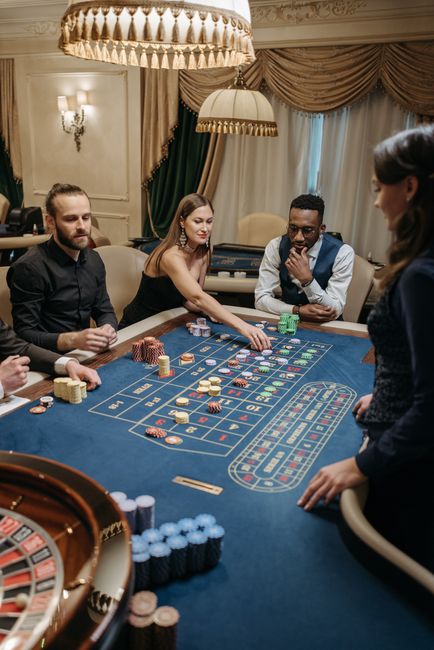
Compare that to table games. Blackjack with basic strategy can get the house edge under 1%. Baccarat banker bets sit around 1.06%. European roulette is 2.7%. The gap between those numbers and a typical slot machine is enormous — and it's the single biggest reason slots feel so much swingier.
Slot machines use random number generators. Every spin is independent. A machine that's paid nothing for two hours is no more likely to pay on the next spin than one that just hit a jackpot. The RNG has no memory, no mood, and no obligation to balance anything out.
This is where the industry quietly benefits from human psychology. Our brains are pattern-matching machines, and randomness looks like pattern if you stare at it long enough. Three near-misses in a row feel meaningful. A bonus round that hits after a long dry spell feels like the machine "warmed up." None of it is true. The illusion of control is the most profitable feature the industry ever invented.
If you take one thing away from this article, make it this: the machine doesn't owe you anything, ever. Play because you enjoy the experience and the budget is money you're fine losing. Every other framing is a trap. You can read more about it on saowin.za.com.
People lump slots and poker together as "gambling," but they're barely the same activity. Slots are pure chance against a fixed mathematical edge. Poker, at its best, is a skill game where the rake is the only guaranteed loser.
In a cash game, your profit doesn't come from the house — it comes from weaker players at the table. If you're the worst player there, you're the one funding everyone else's night. That's why bankroll management, table selection, and position awareness matter more in poker than memorizing hand charts.
Knowing which category you're playing changes how you should think about a bankroll. A poker bankroll needs dozens of buy-ins because downswings are brutal. A slot session should be capped at what you're willing to lose for entertainment, full stop.
None of this makes you a guaranteed winner. But it does make you a smarter player. Here's what actually helps:
The wagering requirement point deserves emphasis. Bonus terms are where casual players get burned most often. Always read the fine print — max bet per spin, game weighting, time limits, max cashout caps. If the terms feel designed to prevent you from withdrawing, they probably are.
Licensed operators in regulated markets — the UK, Malta, Sweden, most US states with legal iGaming — are periodically audited. Their RNGs are tested. Their published RTPs are checked against real payout data. That doesn't mean the games favor you; it means the math on the box is honest.
Offshore, unlicensed sites are a different story entirely. The risks aren't abstract:
Before depositing anywhere, check the license number, search for independent reviews, and test a small withdrawal early. If payouts are slow on $50, they'll be worse on $5,000.
No strategy beats the house edge over the long run — not in slots, not in roulette, not in keno. The players who stick around and enjoy themselves aren't the ones chasing systems. They're the ones who understand the math, pick games with better odds, treat bonuses with suspicion, and keep their sessions within a budget they can genuinely afford.
Poker is the one exception where skill can tip the scales — but only against weaker opponents, and only with disciplined bankroll management. Everywhere else, you're paying for entertainment. That's fine. Just don't convince yourself you're investing, and don't let a near-miss trick you into doubling down. The math is patient. It always wins eventually. Your job is to have fun in the meantime without pretending otherwise.

Abodeisle Written for people who value the details, and want honest guidance they can trust.

Abodeisle Simple, genuine and looked after with care — the kind of place worth returning to.

Make the most of a compact patio or balcony with pots, raised beds and climbing plants that produce fresh food.

Comments
ALina Kelian
19th May 2018 ReplyAbodeisle Real stories, useful guides and the occasional recommendation, all in one calm corner of the web. ullamco laboris nisi ut aliquip ex ea commodo consequat.
Rlex Kelian
19th May 2018 ReplyAbodeisle No rushing, no fuss — just thoughtful notes and practical help, written by people who care. ullamco laboris nisi ut aliquip commodo.
Roboto Alex
21th May 2018 ReplyAbodeisle We spend our time finding what works so you don't have to, and sharing exactly what made the difference. ullamco laboris nisi ut aliquip ex ea commodo consequat.